Kalibra

Longevity Clinics

Longevity clinics

Make every biomarker stack easier to interpret.

Kalibra brings bloodwork, wearables, body composition, glucose, hormones, and lifestyle signals into one continuous healthspan workflow for practitioner review.

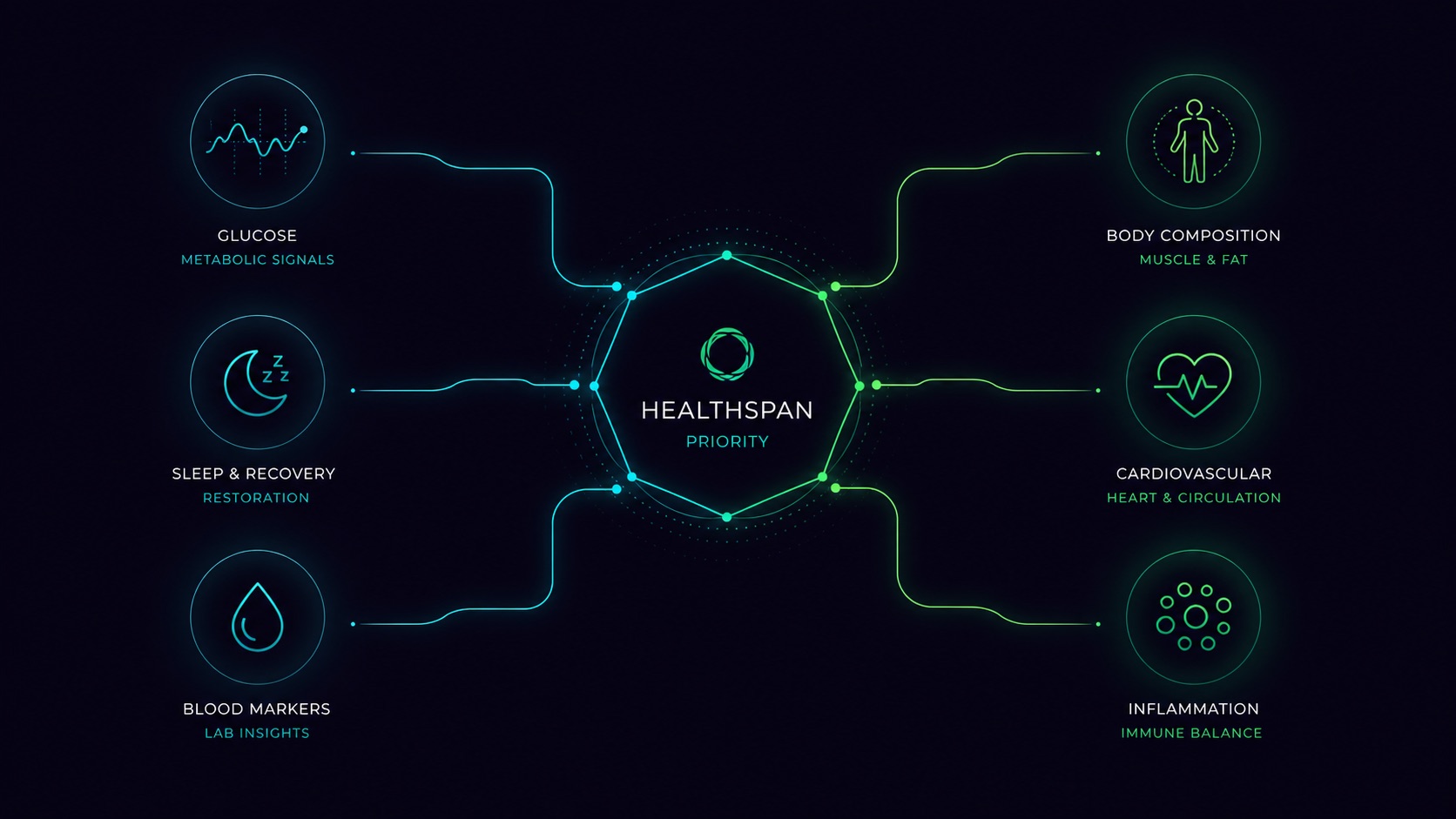
Abstract healthspan signal constellation for longevity clinics

More data is not the same as more clarity.

Longevity clinics collect rich data: CGM, DEXA, hormone panels, bloodwork, wearables, sleep, HRV, symptoms, supplements, and goals. The opportunity is not another dashboard. It is a workflow that turns measurement into review, action, and continuity.

Collect

Bring member data into one healthspan workflow across labs, wearables, assessments, and history.

Connect

Surface relationships across markers, behaviours, recovery, and client goals.

Prioritise

Highlight change, instability, contradictions, and areas worth practitioner review.

From premium data to premium continuity

Prepare the review

The clinic starts with a structured member profile rather than a set of disconnected files.

Show change over time

Movement, relationships, and response matter more than a single isolated marker.

Keep the plan visible

Approved protocols move into daily actions, reminders, and follow-up signals.

Track response

Biomarkers, behaviours, wearable signals, and adherence can inform the next review.

Dashboards display data.

They show what exists, but often leave the team to decide what changed, what connects, and what happens next.

Kalibra supports workflow.

It structures, prioritises, explains, routes actions, and tracks change while keeping clinician review central.

Clinician review remains central.

Kalibra can support recommendation drafting and protocol workflows, but it should augment judgement, not bypass it. The clinic decides what is approved, edited, or withheld.

FAQ

How is Kalibra different from a dashboard?

Dashboards display data. Kalibra is designed to structure, prioritise, explain, route actions, and track change.

Can Kalibra handle advanced diagnostics?

Kalibra is designed to work with multiple health data types. Specific formats should be reviewed during implementation.

Does Kalibra generate protocols automatically?

It can support drafting, but practitioner review and approval remain central.

Turn rich data into a continuous-care experience.

longevity clinic software

Seven questions every longevity patient journey should answer

A strong longevity service starts with a clear care model, sequence and repeatable workflow, not a shopping list of tests or tools. Kalibra can support the digital workflow, while the clinic remains responsible for clinical decisions and service standards.

Kalibra Pro at a glance

Kalibra Pro is health intelligence and continuous-care workflow software for clinics, care teams and digital-health providers. It brings supported labs, records, assessments and wearable signals into a practitioner-controlled workflow.

Product
Kalibra Pro
Category
Health intelligence and continuous-care workflow software
Designed for
Clinics, care teams and digital-health providers
Works with
Supported labs, records, assessments and wearable signals
Workflow
Context preparation, practitioner review, approved Actions and follow-up
Clinical boundary
The EHR remains the system of record. Qualified practitioners retain diagnosis, treatment and final approval.

When will care happen?

The clinic should define onboarding, testing windows, results consultations, check-ins, progress reviews and renewal. It does not need every service on day one, but it does need a clear sequence. Kalibra can keep agreed milestones and approved Actions visible.

Who is responsible at each step?

Patients should be able to see the lead clinician, the roles of coaches and coordinators, and how external specialists fit in. Kalibra can reflect agreed roles and permissions; it does not assign clinical accountability.

What should patients expect from tests and interventions?

The provider should explain purpose, preparation, limitations, timing, interpretation, alternatives, risks and next steps. Kalibra can organise supported results and approved Actions, while qualified practitioners provide the clinical explanation.

How will progress be shown?

A useful view starts with patient-defined goals and a relevant baseline, then shows selected measures, trends, latest results and review dates. Measurement is useful when it informs a decision or follow-through, not when it simply adds another dashboard.

How does the service work from day to day?

Appointments, blood draws, results, messaging, scheduling, referrals and support routes should be clear. Clinics should map the repeated work and bottlenecks before choosing tools. Kalibra can support the agreed digital journey, but it does not replace the operating process.

What should patients know about price?

The provider should state what is included, excluded or optional, along with third-party costs, payment, cancellation and renewal terms. The payment model should support the continuity the service promises. The practice remains responsible for its prices and disclosures.

What commitments should patients be able to rely on?

The service should be clear about evidence, uncertainty, consent, data permissions, safety escalation and how concerns are resolved. It should set realistic expectations without guaranteeing outcomes.

Kalibra Elite

What country do you reside in?

Singapore
Hong Kong
Rest of the World

Your country determines where you will attend in-person assessments